Testing Best-Effort Solar |
June 1st, 2026 |
| batteries, house, preparedness, solar, tech |
I suspect this doesn't pass a cost-benefit test, especially when you consider the risk of serious disasters. Since the harms of allowing it are concentrated (firefighters) while the benefits are diffuse (everyone with solar) and speculative (very uncommon for a disaster to be this serious), however, it got banned.
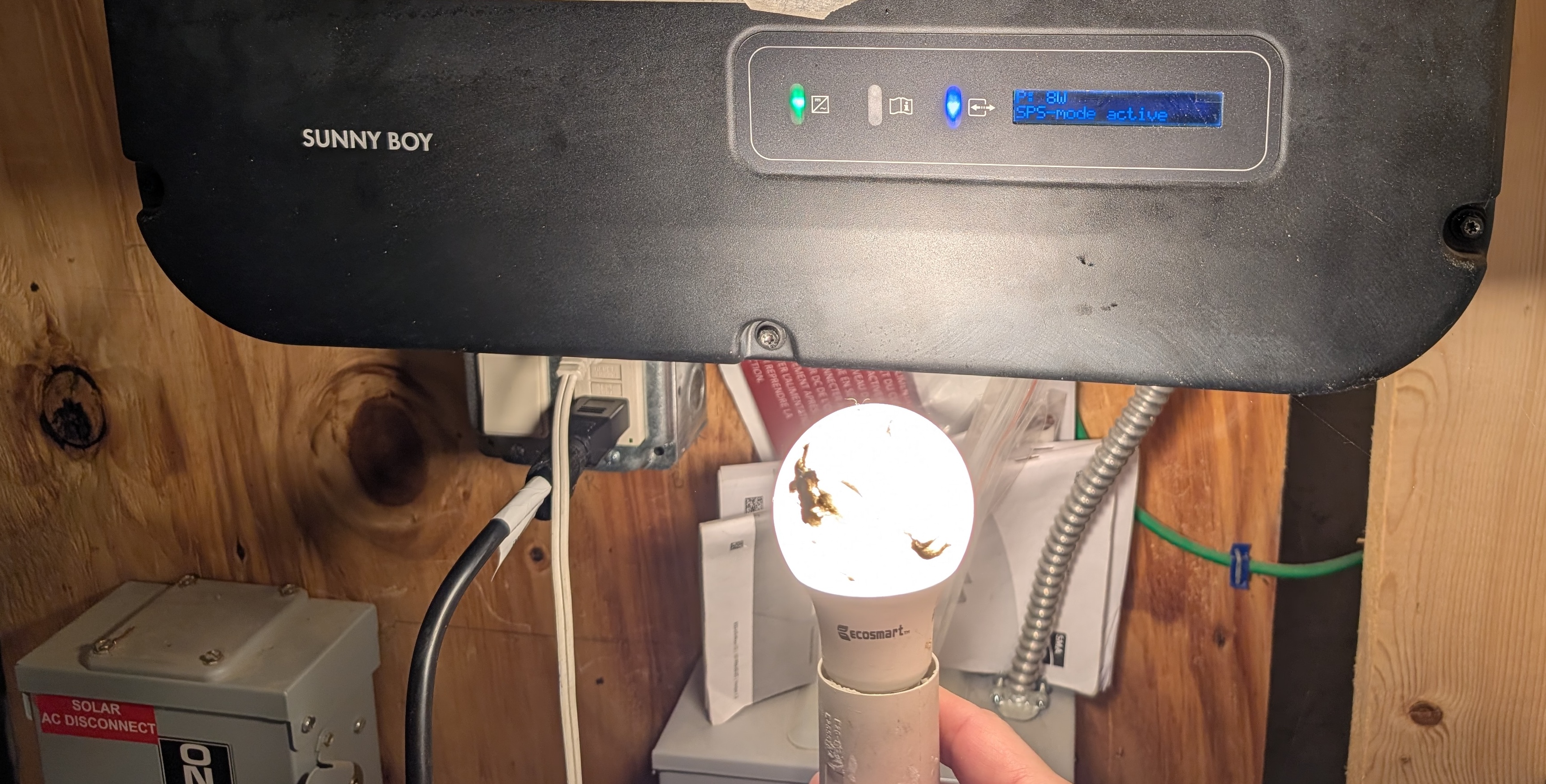
Still, I wanted to make sure mine was still working, and especially that it would be able to charge my two portable power stations (Anker SOLIX C1000 Gen1 and Gen2). I tried over the weekend, but it was cloudy and the panels weren't producing much. It wouldn't charge the batteries, but it could do an 8W lightbulb:
When I came home from work today, it was a complete best case scenario:

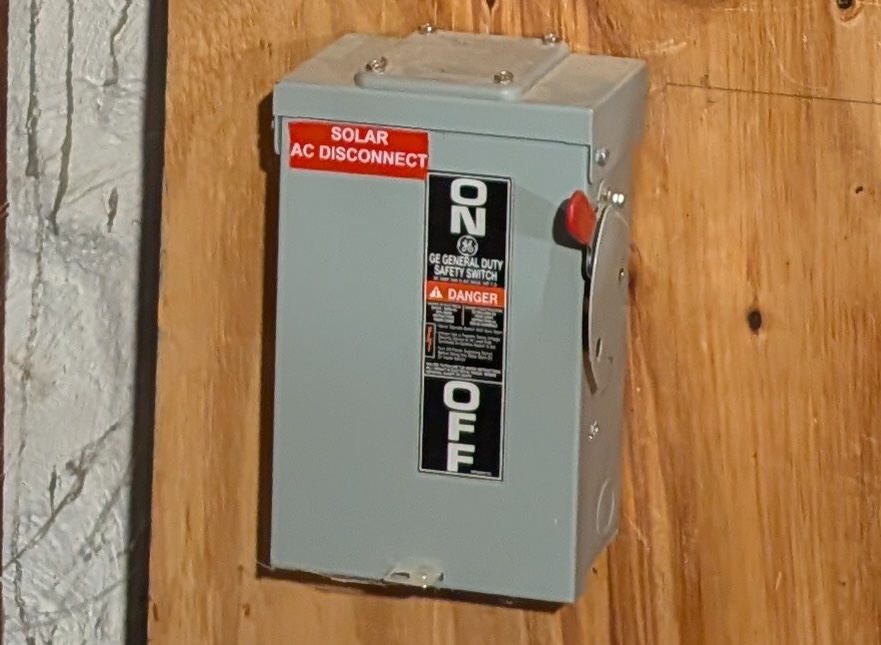
I turned off the Solar AC Disconnect, to simulate a grid outage:
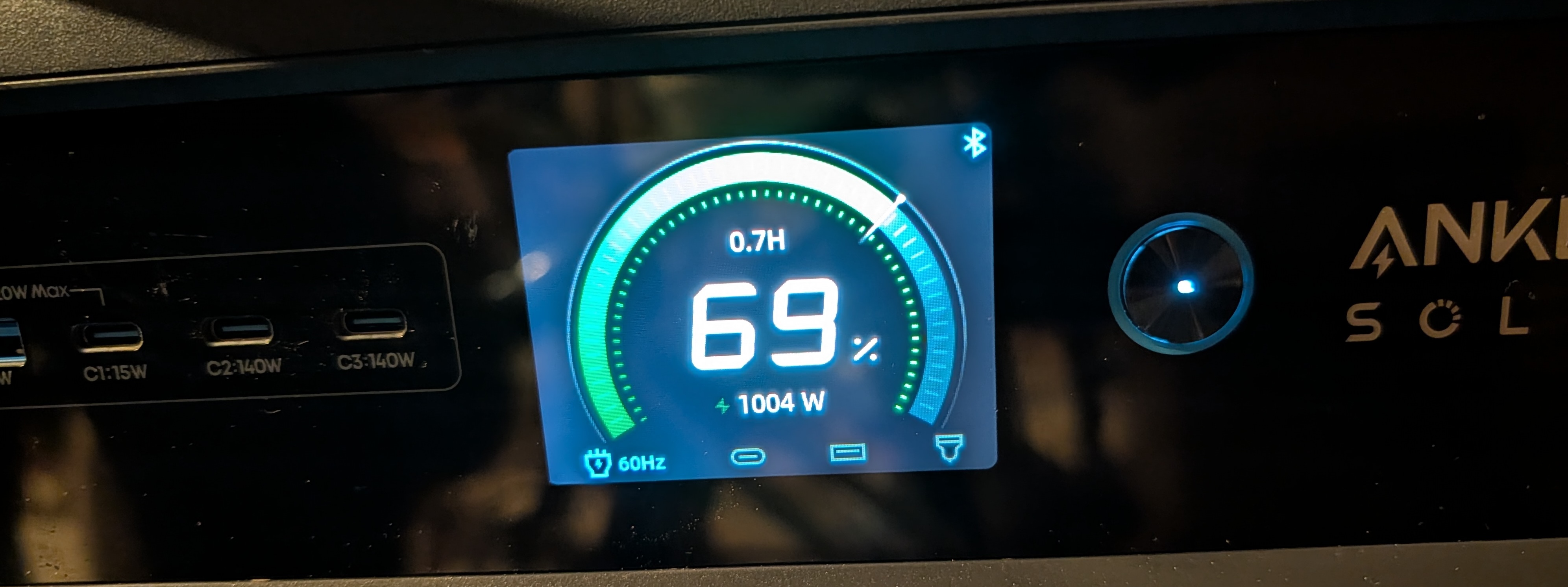
I plugged in the Gen2, and it said it was drawing 1,004W:
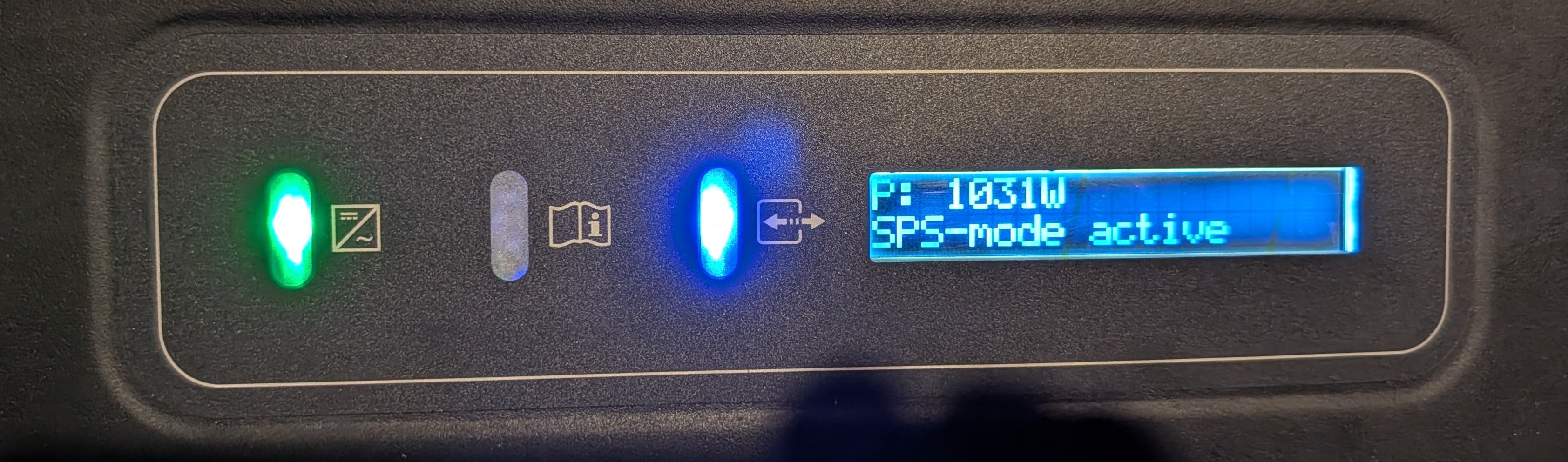
The inverter said it was sending 1,031W, which is close enough:
This is enough for a full charge in about an hour. After it finished, I plugged in the Gen1 to charge. It said it was drawing 512W:
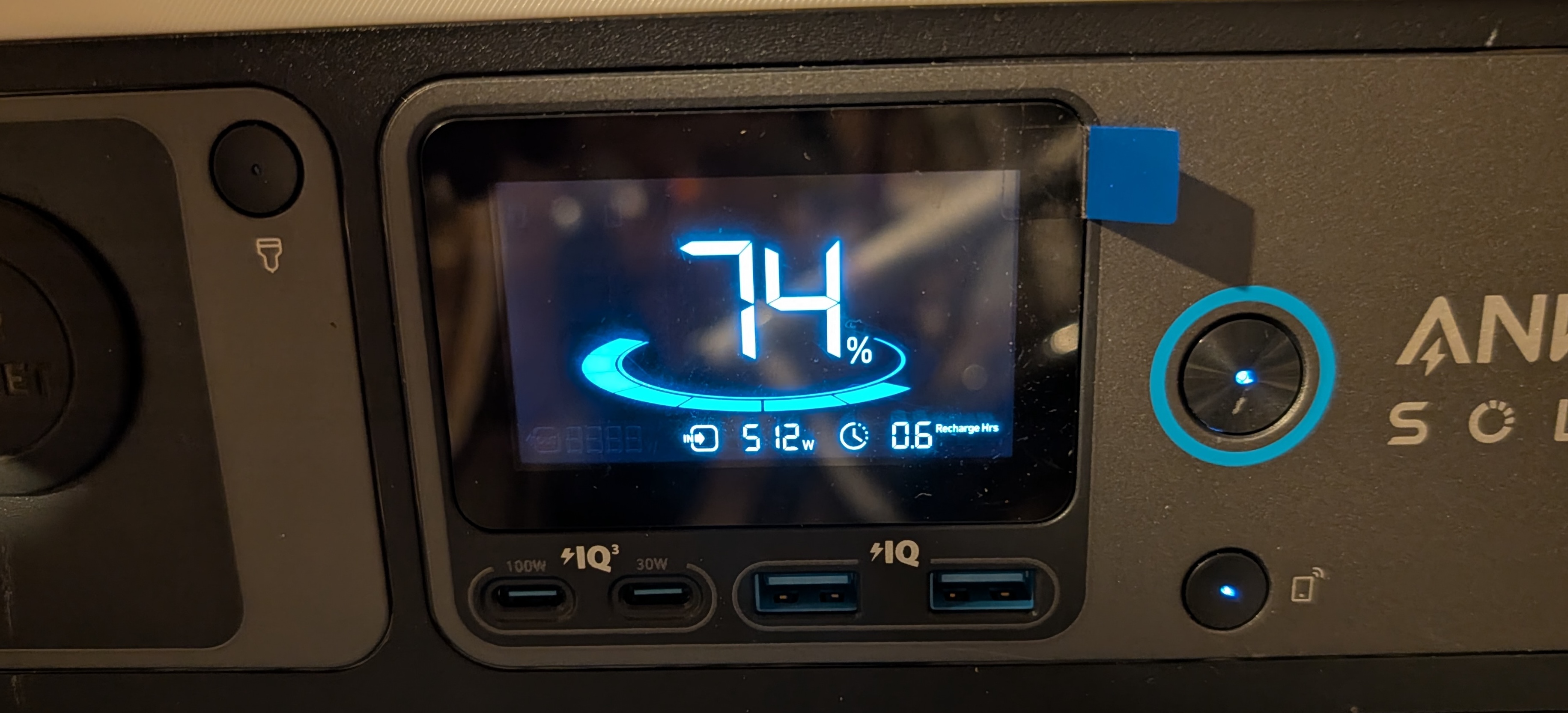
These were both above 50%, though, so it's possible they'd draw more power if they were less full. It looks like you can use an app with Bluetooth to adjust how much current they pull, down to 200W. I wish they had a button for this, but in the meantime I should ensure that we have at least two phones in the house with the app installed.
Overall I'm pretty happy with this, but I don't like the single point of failure with the SPS, and it also doesn't work well when it's not very sunny: there's no way for the power bank to ramp down to draw only as much as the SPS can produce. One neat thing about these power banks, however, is that they have the ability to charge directly from solar panels:
The solar input supports an 11-60V solar charger with an XT-60 connector. If you use an 11-32V solar charger, the current supports 10A max. When you use a 32-60V solar charger, the current supports 12.5A max.
You need an MC4 to XT60 cable, and you need to ensure the panel
doesn't produce more than 60V. Our first set of panels are LG Neon-R
360 (43V) and our second set are QTRON M-G2+ 425
Jinko Eagle 54 G6R (39V). In an emergency it should be possible to
repurpose a panel to charge the battery. It's possible I should get
another panel that wouldn't require climbing on the roof, though!
Comment via: facebook, lesswrong, mastodon, bluesky