Child Handrail Returns |
July 14th, 2024 |
| house, kids |
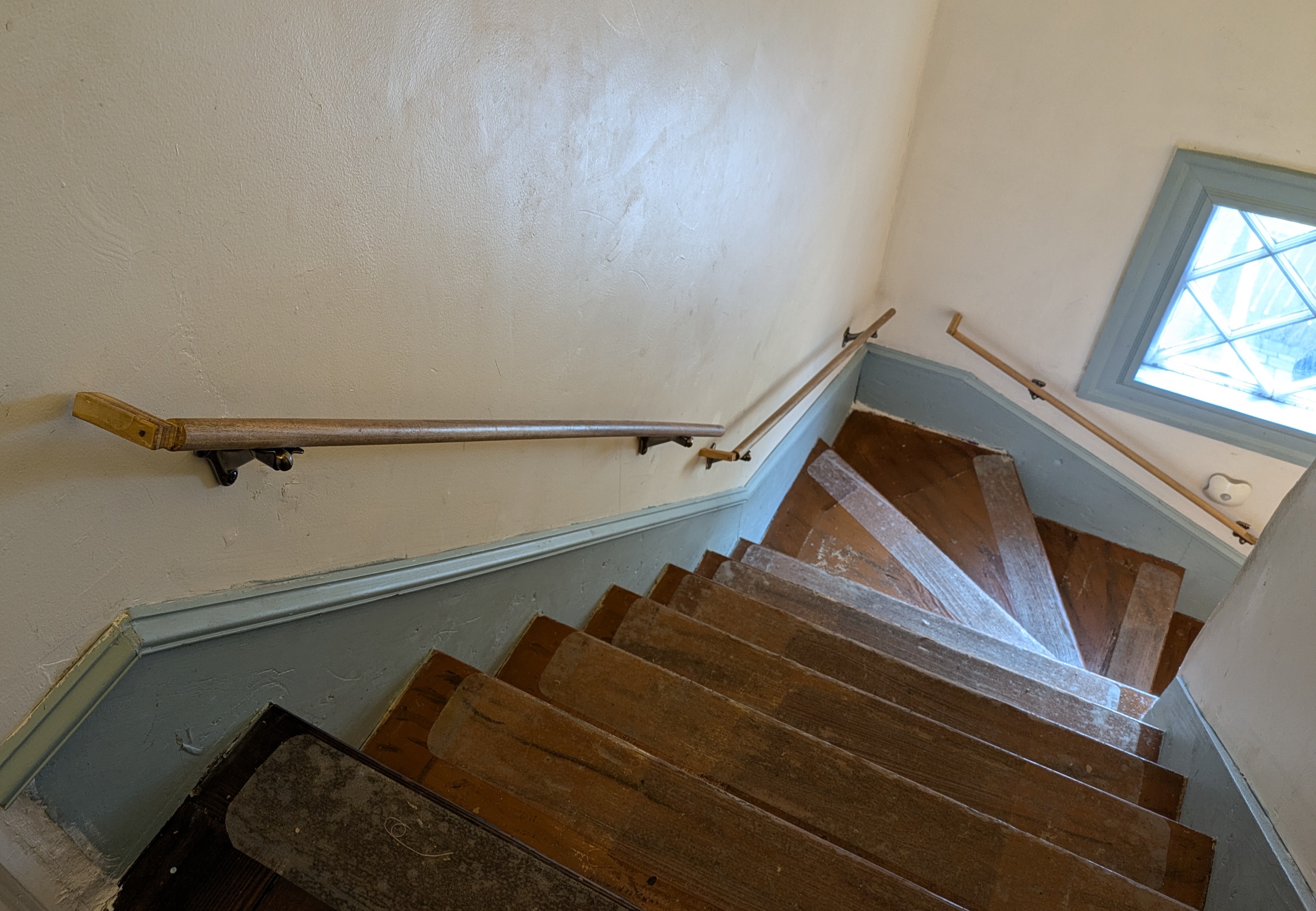
Comparing that picture to the one from seven years ago, you'll notice that I've added small bits of wood running from the top of each section to the wall. These are "returns", and make it less likely someone will get caught and trip. This wasn't in response to anything going wrong, just noticing that often handrails have returns and that the need for them is stronger the lower down they are. It would be even better to have them on the bottom of each section as well, but tripping down stairs is enough worse than tripping up that I didn't get around to that.
I made these by taking a small piece of scrap wood with a pilot hole drilled through it, drilling a pilot hole into the end of the handrail, putting some glue in the joint, and gently hammering a nail in to close it up and clamp it. They work ok? The main problem is if you push them hard the glue will break, and then they rotate. A couple have come lose, and instead of re-gluing it has been easier just to teach the kids not to rotate them.
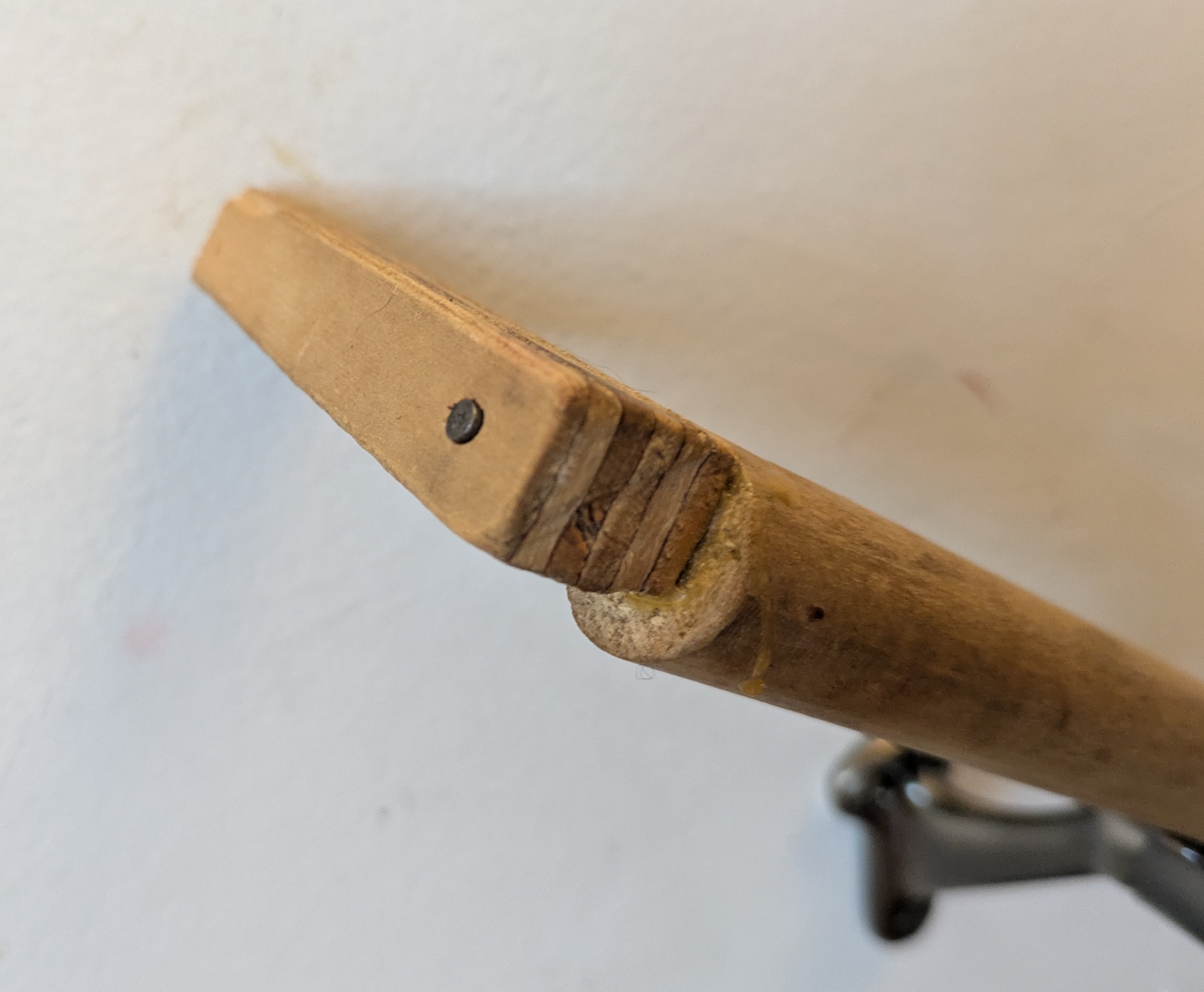
If I were doing this again I would cut the railings with a 45° angle and use an additional section of the same railing for the return. This would give more area for glue, be less vulnerable to rotation, and look nicer.
Comment via: facebook, lesswrong, mastodon, substack