Transcript: Building an Early Warning System for Pandemics |
November 19th, 2026 |
| bio, ea, eag, transcript |
I'm Jeff Kaufman, and I lead SecureBio Detection.
There's a lot of interest right now in new projects to reduce catastrophic risk, and I thought it would be interesting to look at how the project of SecureBio Detection grew from a concept to a running system.
I should warn you up front, I am a very narrative-driven person, and so a lot of this will feel a bit neat, as if stages inexorably flowed together. But the real world is messy and contingent, with key decisions downstream from mistakes, personality conflicts, and luck. There are generalizable insights here, however, and I'm going to see what I can share.
I joined the project early on, but wasn't there for the beginning: I can't speak to quite the whole journey. Instead, I'll start by introducing you to these ideas as I first encountered them.
I learned about the idea of building a pandemic early warning system on the EA Forum. Andrew Snyder-Beattie, who led (and still leads) Coefficient Giving's biosecurity grant-making program, and Ethan Alley, who at the time was running the vaccine startup Alvea, shared a list of concrete projects to reduce catastrophic biorisk. First on the list was an early detection center. I remember reading about it, and that seemed like an interesting idea. I thought, it would be really good for some people to go work on that. And then I kept scrolling.
At the time, I was earning to give at a job I liked. I was pretty content. But then, a few months later, I was talking to some EA friends about whether I could be doing something more valuable, and I realized, actually, biosecurity was a place I could contribute. And as I talked to more people and started to look for biosecurity projects to work on, one that seemed particularly promising was the Nucleic Acid Observatory. Will Bradshaw, Mike McLaren, and Anjali Gopal had founded it within Kevin Esvelt's lab at MIT, and I talked with them, quickly became very excited, and decided to join the project.
The core motivation for the project was that, if someone made a pathogen like HIV that could be infectious without noticeable symptoms, it could spread widely before anyone knew there was anything to defend against. This kind of stealth pathogen could be really bad.
But at the time I joined, I didn't actually know this. People were still unsure how much of an information hazard (pdf) this idea was, and were being cautious. Eventually, they decided that the risk from keeping quiet was higher than the risk of talking about it, since it's very hard to address in secrecy, and wrote about stealth pandemics as a potential global catastrophic risk. Navigating this kind of trade-off around information hazards has long been a major challenge in biosecurity, though the trade-offs have shifted as risks have gotten closer, and open-weight models have become more capable.
This effort was originally homed at MIT, but as a larger fraction of our efforts shifted to running a biosurveillance system, we spun out into a non-profit, SecureBio, and were fully independent in late 2024. To reflect this, we rebranded in early 2026 to SecureBio Detection. We're now applying pathogen-agnostic analysis to sequencing data from wastewater and nasal swabs at over 50 sites around the US.
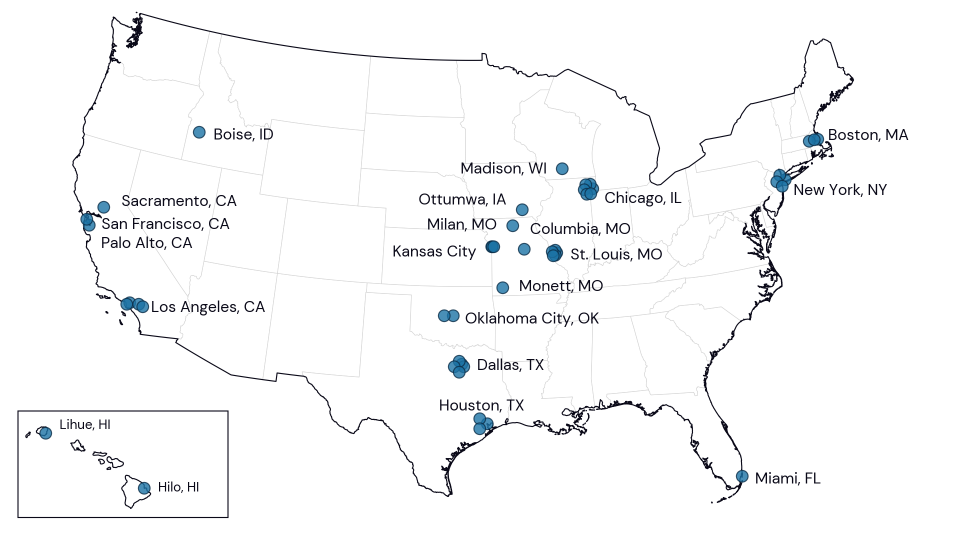
So that's the two-minute version. Let's go a bit deeper.
From a strategy perspective, we started as a research group. We knew the overall problem needed to be solved end-to-end, but we saw the hardest piece as developing the technological core of the system. How do you go from a physical sample to identifying a novel pathogen? This was a lab problem and a computational one, very much research and development.
But over time, as we made progress in both areas, it became clear that the default process of turning this R&D into real-world biosurveillance was going to be too slow. If we wanted to move this along with appropriate urgency, we were going to need to do a lot more ourselves. We started building out a sampling network, and we started processing some samples for production—real data on a short enough turnaround time to be useful—in addition to R&D.
And then, when you're processing real data, you can find real things, which means you need to be able to let people know what you find. So again, we expanded our scope to include escalation. Detection is worthless if it doesn't lead to appropriately rapid response, and building out these connections in advance is critical.
So, this is where we are today. We bring in and sequence samples, analyze them, both to improve our methods and to detect pathogens. And when we do find things, we escalate to groups who are in a position to handle response.
As our strategy evolved over this period, so did our infrastructure. When our near-term theory of change was centered on solving hard research problems, a lab at MIT was a logical home. But even from the beginning, it was clear that eventually we'd need to do more than this, and we set up a non-profit, SecureBio.
I am not an operations person, and this is not going to be a "key things you need to know in founding a non-profit" sort of talk. But one thing that quickly became clear was the value of independence. When we were looking at our first commercial contract, where we would be analyzing samples for the US military, processing these in our academic lab wouldn't be an option because of rules around publication requirements. At the non-profit, we could decide that the benefit of being able to process these samples and learn from them internally and influence USG outweighed the downsides of not being able to talk publicly about what we learned. And so we decided to take on this contract, which we could do as a non-profit.
But this does bring me to an important way that I oversimplified earlier. We don't do all the sample collection or the sequencing ourselves. We've partnered with eight university labs around the country and one defense contractor to collect samples, and with the University of Missouri to sequence them. While there are complexities in working with external partners, especially academics, this has allowed us to expand much more quickly than with a "do it all in house" structure. It's also had serious field-building benefits, where a lot more people are interested in generating and working with this kind of data now. I expect we'll continue working with a range of partners. Coming at this from a non-profit perspective, it's not important that we solve problems with our own hands, just that they be solved.
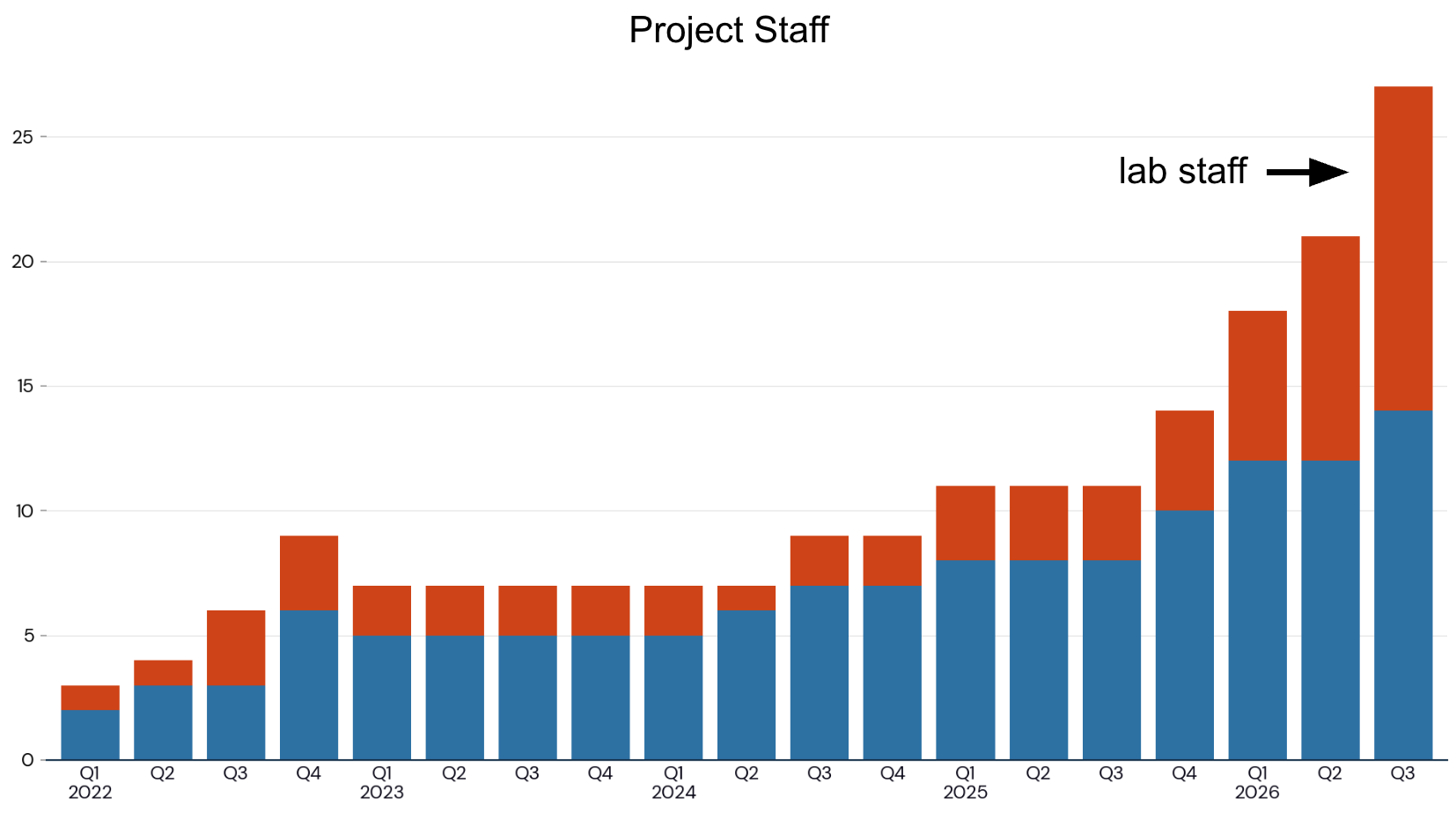
You can think of this infrastructure as the framework on which we've built our team. The simplest summary statistic for understanding a team is how many people you have. You can see that we initially grew quickly from three founders to a team of nine, but in Q4 2022, FTX collapsed. This massively changed the funding outlook for us and other projects, as funders across the ecosystem pulled back to cover the hole left by FTX not only disappearing, but turning out to have been distributing the proceeds of fraud.
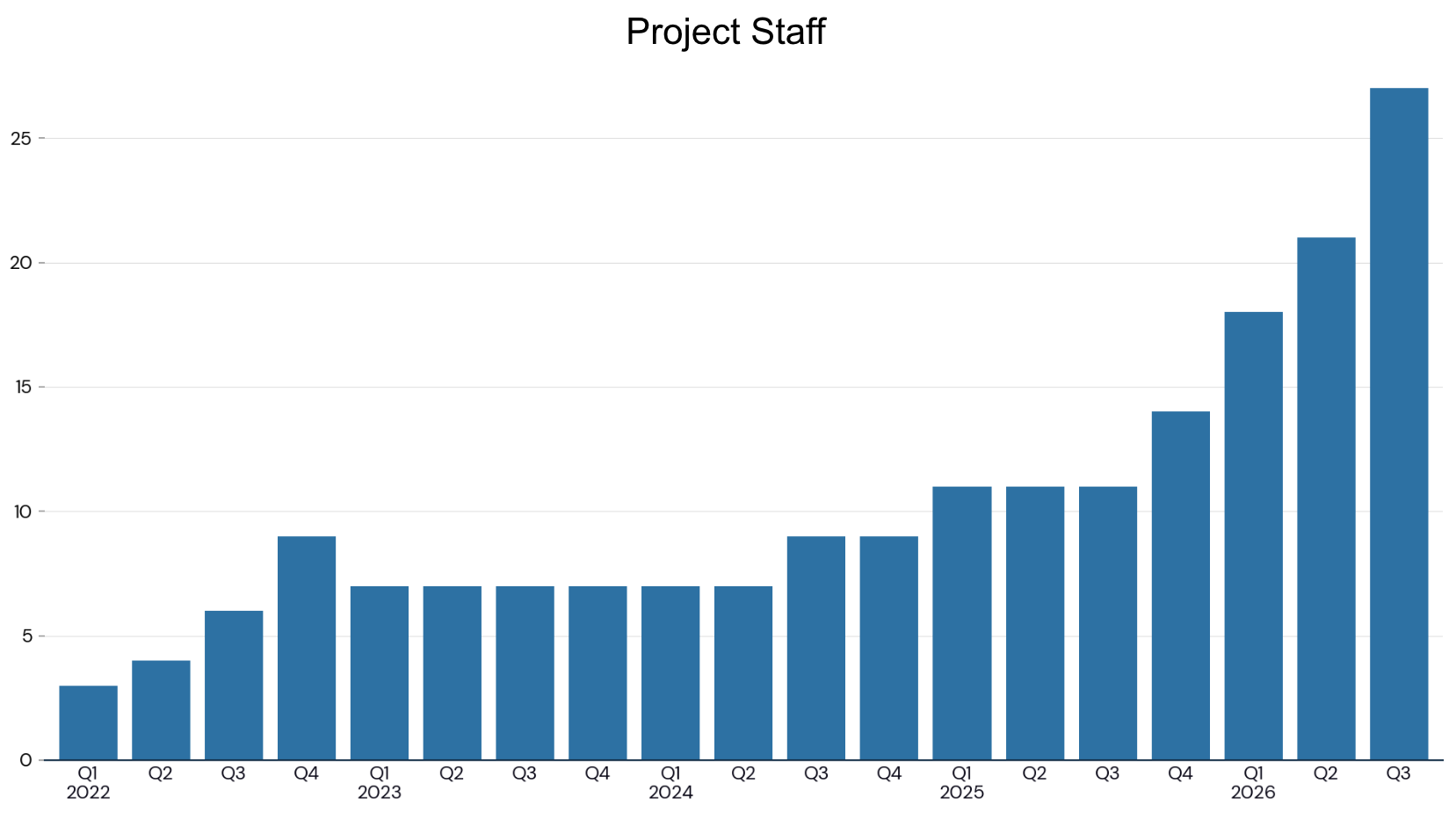
We buckled down and focused on developing laboratory and computational methods for pathogen detection, and in early 2024, as AI kept not hitting a wall and funding started picking back up, we were making good progress, and we had a system we were excited to scale up. We started growing again, and in mid-2025, we realized we needed to be growing faster as advancements in AI increased our (and our funders') sense of urgency.
This has increasingly meant building out our lab, where as we scale up production work, we've needed hands in the lab to do the sample processing. Long term, though, I don't expect this relative level of lab growth to continue, because we're investing in automation. This means that labor hours per sample are already falling and will fall further as we automate more.
With a larger team, we've been able to get a lot more done. I think this is easiest to see in how many samples we're processing. We didn't collect literally zero samples before Q4 2023, but it was close enough to zero that it doesn't show up on the chart. In Q4 2023, we started an ambitious effort, Project Runway, to compare municipal versus aircraft wastewater, and we went from processing zero weekly samples in our lab to 15.
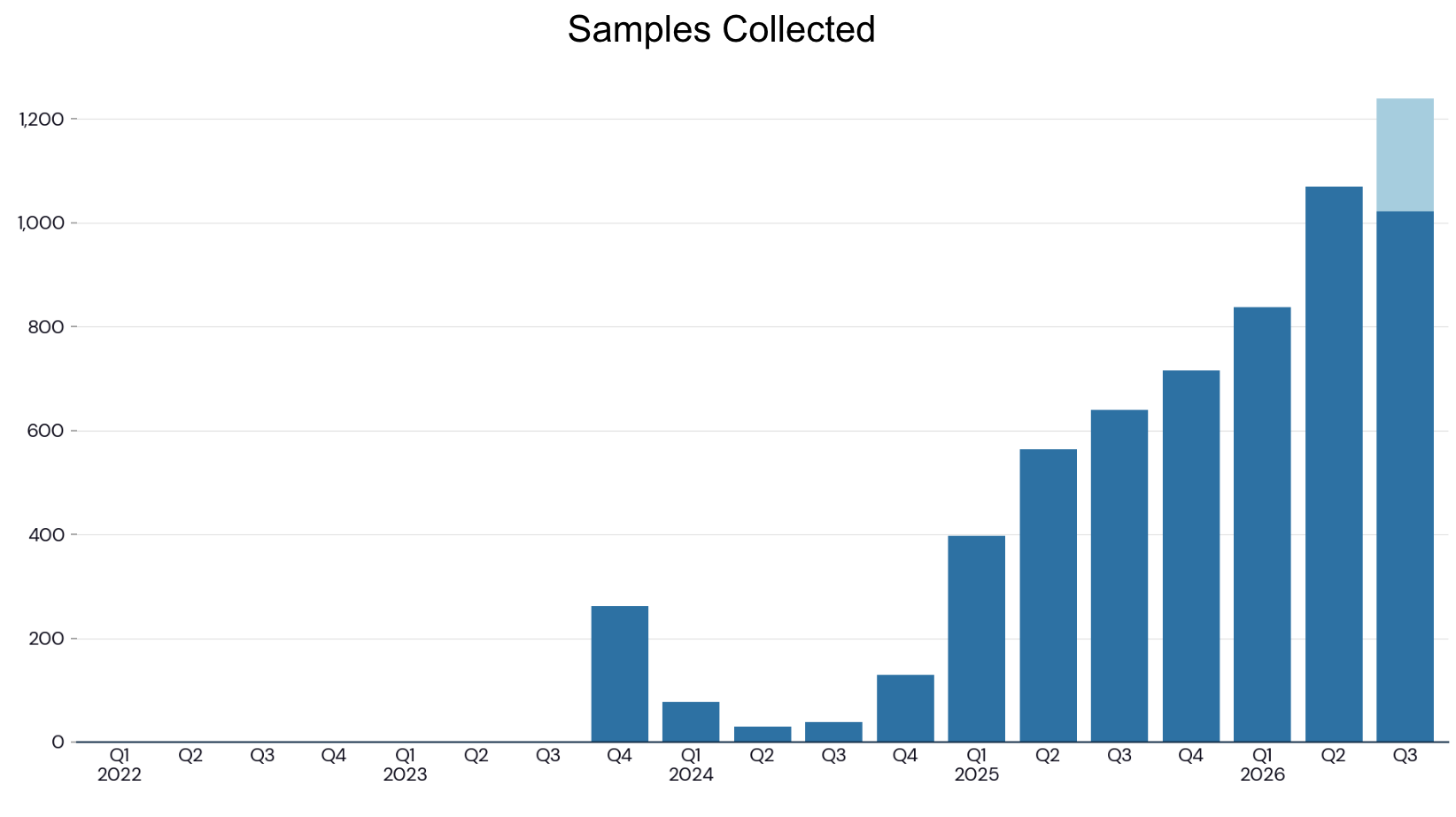
Keeping up with the rate at which we were collecting samples and getting them down to extracted nucleic acids took our full lab capacity, and we built up a serious archive of samples in the freezer. But this put us in an awkward position where we had this great archive, but we weren't yet sufficiently satisfied with our capability to finish these samples. You don't want to waste your precious samples on bad methods. And then, by the time we did have the capability, we had fresher samples and we wanted to prioritize those. So it wasn't until much later that we finished most of these samples, and it was mostly outsourced.
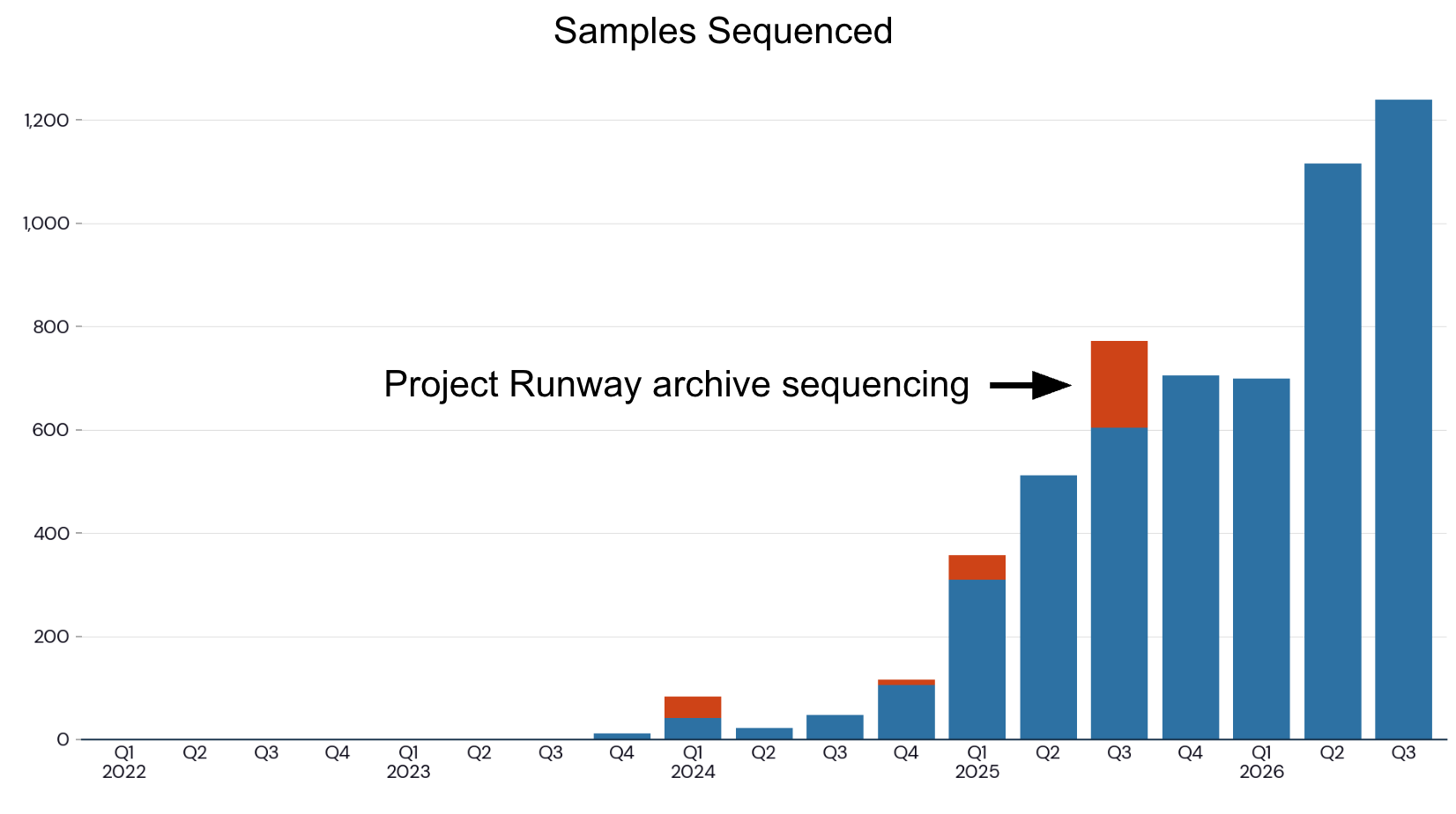
This illustrates an important risk of ambitious bets. We thought the path to widespread deployment ran through rigorous studies, carefully building the case for metagenomic biosurveillance. Several months later, having gained a lot of experience on one slice of the problem and with a lot more work left to do to turn it into a sufficiently impactful study, we pivoted to a strategy of incremental exploration and slowly building up production capabilities. We did eventually share a manuscript from this work, and it's an important contribution that has helped shift attention towards aircraft wastewater, but it is a bet that paid off much less well than we'd originally hoped.
And yet, I am more worried about the bets that we did not take. An example of this other direction was hiring an experienced laboratory lead. We did eventually make this hire in Q4 2025, but in retrospect I should have done it at least a year earlier, maybe two. The value of having an experienced lab scientist leading the lab has been very high, and if we'd made this hire sooner, we'd have made more progress in lab R&D and production automation, and we'd have a more sensitive and efficient system today.
The head of lab science wasn't the only role I took too long to realize we needed. In Q4 2025, we brought on three different senior leaders: partnerships and response in addition to the lab. This is another thing that should have started sooner. Once we did, each area could grow with focused leadership.
Now, you can't expect someone will come in understanding already what you need to do and why. They'll have their own sense of what needs doing. You need to work with them so that they can understand what's distinctive about your goals. And you need to be learning from them in the places where they are strongest. Overall, however, hiring the right senior talent is one of the highest leverage things you can do.
When I think about why we didn't make these calls earlier, I think it was a mixture of not engaging enough with funders to understand the extent of their appetite to support growth, and not fully grasping the benefit that these leaders would bring to the org.
When I think about the situation that people starting projects are in today, and I compare it to our experience, I see two big factors.
The first is time. There is less of it. Our project has been able to build up our strategy, infrastructure, staffing, and execution over a period of four years. But you don't have that luxury. If you compare today's public models to the ones from a year ago, year before that, year before that, extrapolate out four years, I find it very difficult to envision where the world will be. New projects need to be prepared to move very quickly, and I'm much more excited about work with a one- or two-year path to significant impact than ones that need three, let alone four years.
On the other hand, there is also a lot more money. Many funders feel this urgency, the same way we do, and are putting their money into trying to support projects in appropriately urgent build-outs. In AI, a major effort is Coefficient Giving's Project Tailwind, where they're looking to donate over a billion dollars in 2026, and more than that in 2027. The cG Bio team is also moving a lot more money, the OpenAI Foundation has started getting money out the door, and Anthropic donors are coming online as well. So, if you have the right skills and can move quickly, there is potentially a lot of support.
Looking back, I have four pieces of advice.
First, carve out a coherent scope. Early on, we picked one piece of the problem: how do you go from a sample to determining whether there's anything concerning in it? But, as it became clear that sample collection and escalation weren't going to get in place quickly enough on their own, we expanded to include them. A coherent scope does not mean taking on the whole problem end-to-end. It wouldn't make sense for us to get into stockpiling and distributing personal protective equipment. But, as a detection project, it has been important that we take on a coherent chunk of the problem, one that leads somewhere and integrates well into the larger ecosystem.
Second, partner extensively. There are many groups with experience on parts of the problem, and some who already want to work on exactly what you think needs doing, if they only had the funding. Identifying and partnering with them is very high leverage. We wouldn't have the sample network we do today without drawing on the interest and expertise of allied academic groups around the US, and we'd have much less sequencing capacity without the University of Missouri.
Third, seek out senior talent early. If you're trying to lead everything yourself, you will move too slowly, and you will make mistakes that someone who had done similar work would have avoided.
Finally, I would advise you to lean ambitious. While we've made mistakes, both in the direction of taking big bets that didn't pay off and missing opportunities to take such bets, I think we have made far more of the second mistake. Less time and more money push even further in this direction. We need people who will take on big things and move quickly. As a community, we are building out a portfolio of bets, and while each one should be a good bet, we accept that not every bet will pay off.
Four years ago, I read about this idea, and I thought it would be great for someone to work on building a detection system, and then I kept scrolling. There are a lot of people who haven't yet taken these ideas seriously enough, or thought about how to apply their careers. Some of them are people you could recruit. Some might even be you. There's a lot we need to do to get ready for the advent of transformative AI, both within bio and outside. I'm excited about the ambitious ideas I've been hearing this weekend, and I'm looking forward to seeing what you do.
Comment via: facebook, lesswrong, the EA Forum, mastodon, bluesky