Happiness Logging |
October 27th, 2013 |
| happiness, logging |
This disagreement between emotion as it is experienced and emotion as it is remembered is called the memory-experience gap, and the peak-end rule is only one of the causes. The problem is, generally we only have access to memories of our emotion, which means if you're given the ice-water choice you'll repeatedly choose the option with more suffering. How can we get around this?
When psychologists want to get at experiential emotion they give people little timers. Every time the timer goes off the person writes down how happy/sad they are at that moment. This is an external sampling method that lets us use any sort of aggregation we would like, and it's fair in a way our internal methods are not. When I first read about this I thought "neat" and moved on, but recently I realized I that with a computer in my pocket I could do this myself. After asking around I ended up with the TagTime Android app, which is the only way I've found to do this that (a) works without an internet connection and (b) has an equal probability of sampling at every moment.
The response screen looks like:
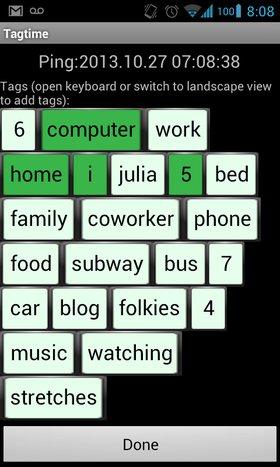
You tap tags to say which ones currently apply. I have them sorted by frequency. To add new tags you turn the phone sideways and type text:
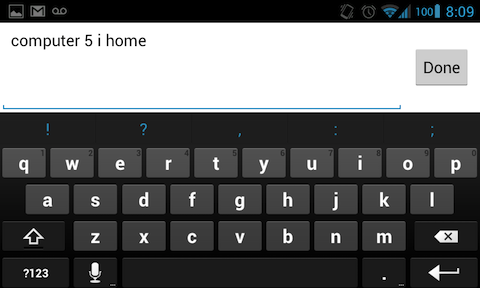
That's a little annoying, but most of the time I'm not entering a new tag.
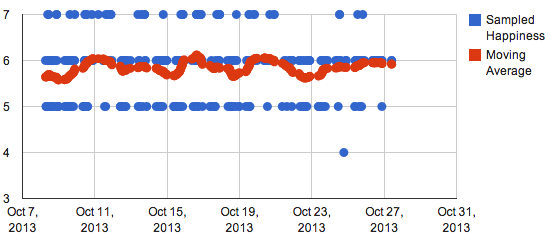
I have tags for happiness (numbers 0-9, added as I need them), for aspects of activities, and for people I'm with. Every so often I email the data to myself and add it to my full log which backs a graph:
Retrospective happiness still matters; you want to be happy with your life looking back. Because this is our memory, however, we're already aware of it and already optimize for it in our life. Adding sampled data should allow us to adjust that optimization to fix the things that are important but hidden by our biased memories.
Comment via: google plus, facebook, lesswrong, r/QuantifiedSelf, substack