Short Time Outs |
August 25th, 2026 |
| kids |
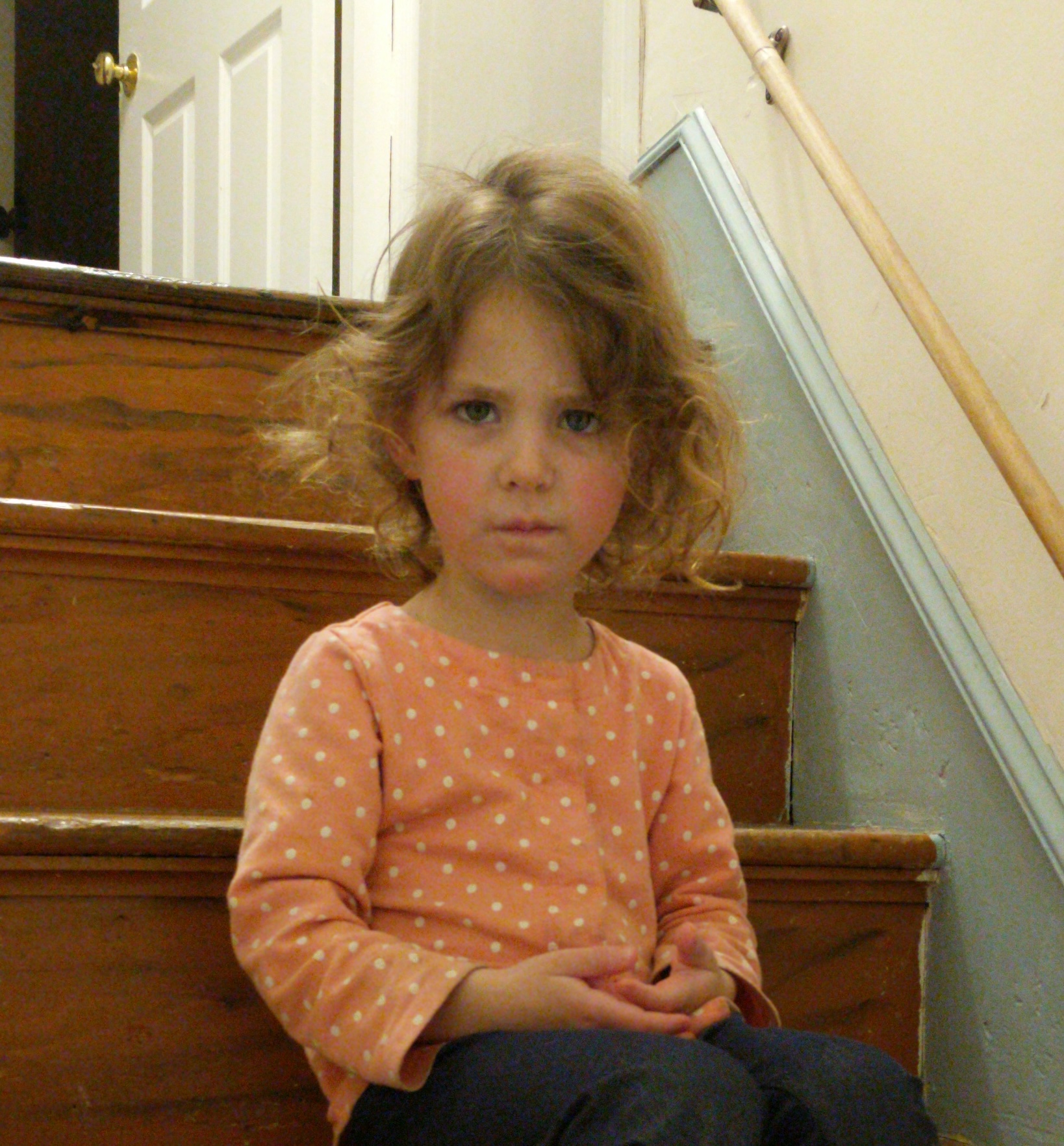
We typically put kids in time out in three ways. The most common way is when we count to three but they still don't listen:
Anna: Lily, get out of my room.
Lily: You said Nora could be in here, so I can be too.
Anna: Dad!!
Me: If Anna says you need to get out of her room, you need to get out of her room.
Lily: This isn't fair.
Me: That's one.
Lily [huffs]
Me: That's two.
Lily: [huffs]
Me: That's three; time out.
We don't usually get all the way to time out. Typically "that's one" would have been enough: it shows that we're moving from our normal mode of interaction to "actually this is just something you just have to do."
Another way kids will go in time out is in persisting after a warning:
Nora: [throws a toy wildly in the living room]
Me: No throwing indoors. If there's any more throwing that will be time out.
[short time passes]
Nora: [throws another toy]
Me: That's time out. No throwing.
I wouldn't count in this case because there's no ongoing activity to stop, and they were already on notice that doing more would be time out.
Finally, someone might go in time out with no warning if they do something sufficiently egregious, like escalating to violence:
Nora: You're a stinky face!
Anna: [whacks Nora]
Me: That's time out. No hitting.
In each of these cases, however, they might only spend a minute in time out. What seems to be important is that the time out is a consistent, clear, and immediate signal of parental disapproval. It doesn't need to be particularly unpleasant in itself; knowing that I'm unhappy with them seems to count for a lot.
Other thoughts:
Time out is having to sit on the stairs. While they're in time out we ignore them. They can't bring toys or books with them, and it's pretty boring, which is part of why it works.
-
Julia adds that this extends to the cats:
There's a rule "don't interact with people who are in time out" which I've now started enforcing for cats too. One of our kids spends timeout snuggling the cat if at all possible, and loudly exclaiming over the cat so as to convey she's enjoying it. I've now started coming up, telling the cat "[name] is in time out, so we're leaving her alone" and carrying the cat away.
If they went in time out because they were refusing to do something, they do still have to go do that thing after. This is a kind of forfeiting ill-gotten gains.
If they're clearly upset I'll have them stay in time out until they've calmed down.
Simple separation is often enough. If the kids are fighting I might ask one of them to leave the room.
I often see parents give commands they don't really need to, where they could instead let the kids work it out or decide that it's not important. If there's nothing to enforce it can't lead to a time out.
I do need to be careful: if I ask them "are you going to clean up this game before moving on to the next" then it would be wrong for me to threaten them with time out if they said no.
Comment via: facebook, lesswrong, mastodon, bluesky