Charity Navigator Pushing for Results |
June 19th, 2013 |
| charity_navigator, ea |
While I didn't see any way to fix this, I've now read their description of CN 3.0 (pdf), and I'm actually kind of optimistic. The idea is that you change the incentives so that charities are putting more information out there, and then you can evaluate them better:
CN 3.0 seeks to change this by recognizing charities that do a better job of reporting their results. This provides effective charities with a particular opportunity to demonstrate their effectiveness by reporting their results. As more charities report their results, givers and social investors will have more and better information to inform their decisions.Here's an example of that results reporting:In the future, when more results information is available, Charity Navigator will assess those reported results. But before it is possible to evaluate results, it is necessary to shift the paradigm of charity reporting from the current norm of selectively reporting, such as storytelling or case studies that may not be representative of overall performance, to reporting on demonstrably important measures, and showing how the organization learns and improves based on those measures.
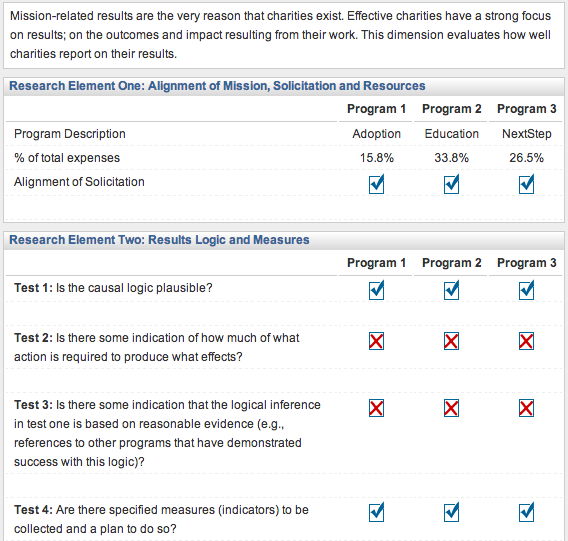
While this isn't perfect, it's still very good news: Charity Navigator is influential [1] and shifting money to more effective programs is valuable.
(The nonprofit reactions I can find are pretty negative: Charity Navigator 3.0: The Empirical Empire's Death Star? and Charity Navigator 3.0: Missing the (deeply human) point of philanthropy?)
[1] GiveWell may be catching up, though. In 2012 they
moved only 20% less money to charities through their website than Charity Navigator
did through theirs. If that's roughly proportional to total money moved then they're
in the same range, but CN estimates their total annual money
moved at $5
billion to $10 billion while GiveWell estimates only $10 million. That means Charity Navigator
is estimating a 2500x multiplier while GiveWell is estimating only 4x. This is kind of
strange. It doesn't look like GiveWell is pushing donation much harder than Charity
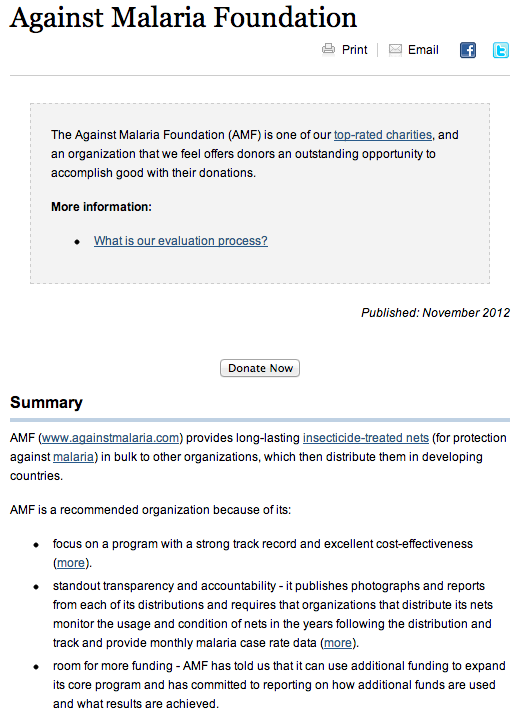
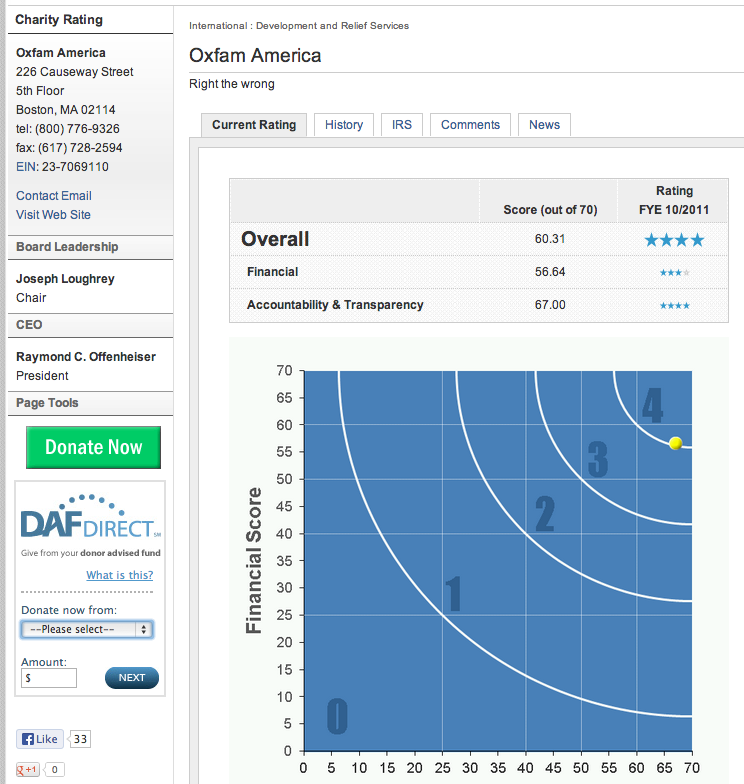
Navigator is (screenshots: GiveWell, Charity Navigator) so I don't know why their multipliers
are so far apart. In GiveWell's case you can get an upper bound on money moved by looking
at total funds received by recommended charities, but that would be an extremely weak
upper bound if applied to Charity Navigator. I don't know what's going on here.
Comment via: google plus, facebook, substack