Pulling the Lever in a Subway Problem |
November 9th, 2026 |
| ea, morality |
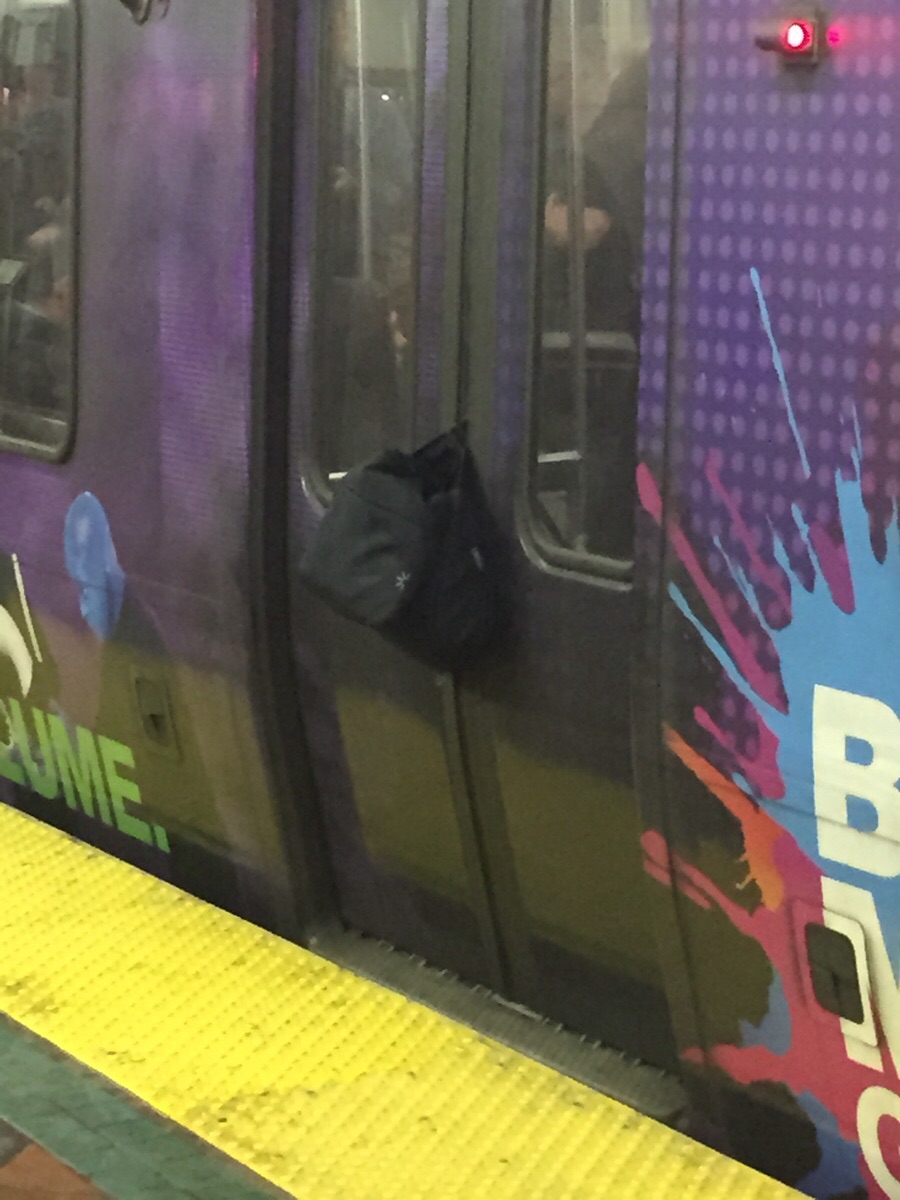
Hi! I'm the person who pulled the brake. What I saw:The train starts pulling out of the station. Someone begins shouting that their arm is caught in the door. I look over, see that the door is closed somewhere between their elbow and wrist, but it's not clear exactly where with their jacket on. People, including me, start shouting to pull the brake, but no one does. The train keeps accelerating, and it looks to me like once we get to the end of the station they're going to lose their hand. I get to the back of the car and pull the brake.
After the train stops, the man manages to pull his arm into the train, with his bag still on the outside. If he'd let go of his bag I think he would have been able to do this sooner, but he was panicking as I suspect most people would with their arm half out of the train like that.
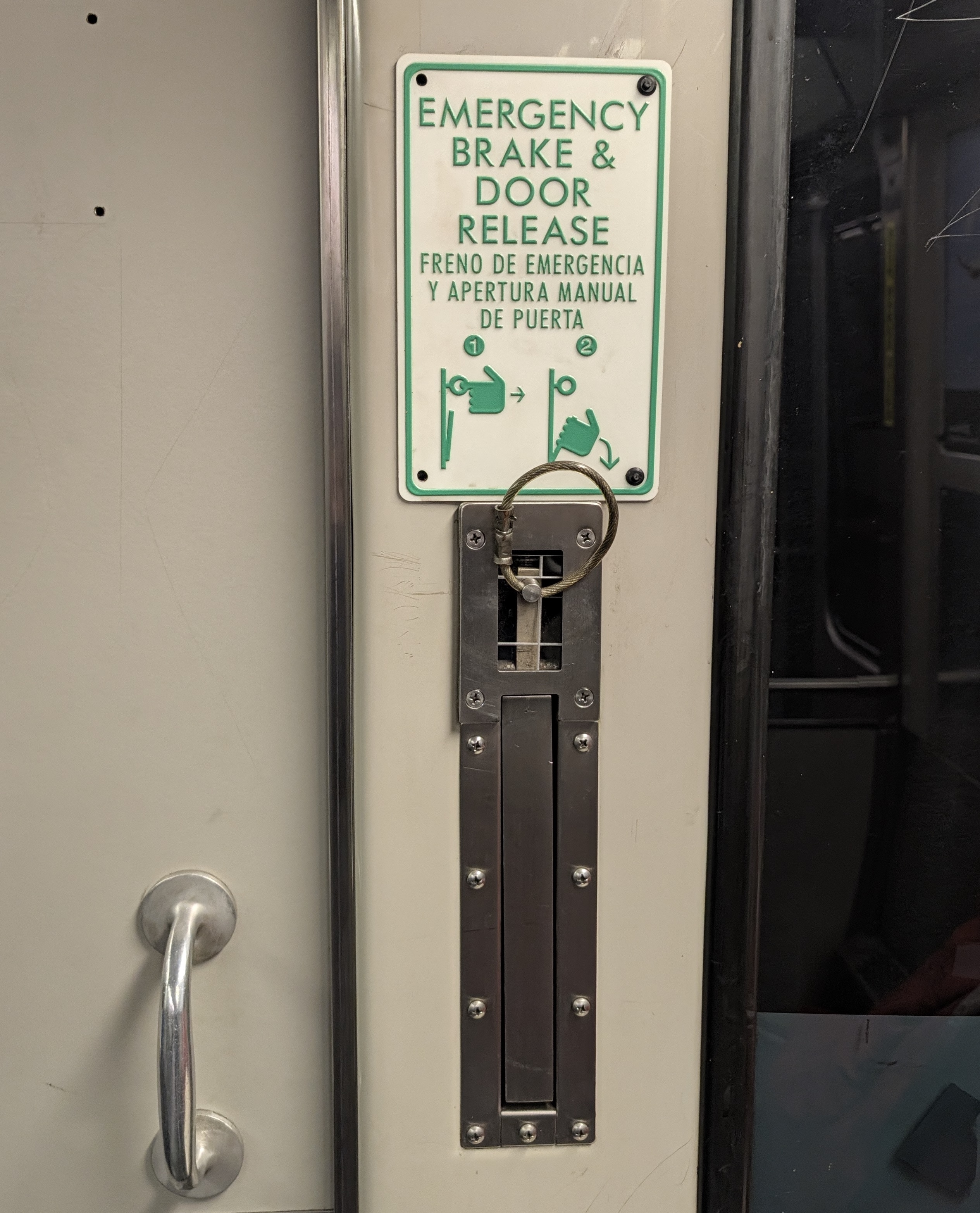
I was pretty shaken up, and didn't end up blogging about it, but it came up again at one of our effective altruism dinners. This got me thinking about ways that philosophical problems do and don't translate into real life.
In this situation the stakes were lower than in the traditional trolley problem, and the situation is closer to Scanlon's Transmitter Room (What We Owe to Each Other, quoted jokingly here). The worst case was someone's arm being badly injured, maybe permanently. On the other side was delaying the whole line for an hour, perhaps losing ~4 years of waking life in total (~25k people * 1hr / 16 / 365 = 4.3y). But were these the real stakes?
I now think his arm probably wasn't caught in the door. That's what it looked like to me, and I was very sure at the time, but people who were closer disagree:
I was in the car too -- I could tell that it was just his bag in the door, but in a split second, I was having a hard time telling how big his bag was, and I wasn't about to guess how wide the tunnels were since he wasn't letting go of his bag when the train started moving. I'm glad u/cbr ran to pull the brake -- I was one of the folks yelling to passengers to hit the call button to get the T to stop, and everyone at that end of the train just seemed to freeze. —zapdot
And:
I think what the above poster is saying is that there was a lot of miscommunication inside the car. I watched it happen from the outside and I never saw the dude's hand in the door. I saw him pulling the bag with both hands then I saw the brake come on. —dizzyrags
This illustrates a major way philosophical problems can fail to translate to real life: we're always acting under uncertainty, without knowing the consequences of our options. People understand this, and often "fight the hypothetical", but needing to make decisions when you really don't know whether you've read the situation correctly is a key part of real life morality. We need to make decisions that are robust to us having misinterpreted the situation.
(When Julia found herself in "drowning child" situation it was similar: the hard part was assessing the world, not whether to act.)
The other big way this differs from a textbook thought experiment is that it's not clear that the "inaction" case actually would have avoided a train delay. If I'd been right about his arm, I expect once the accident happened he would have been screaming even more, and I or someone else would have pulled the brake anyway. Which might well mean a worse delay, since now there's an injury involved too.
Which illustrates another way that intuitions built from philosophical problems can lead us the wrong way: this didn't occur to me at the time. It's hard to think very far ahead in an emergency, but morality problems often suggest a frame of mind where we have time to fully reason out the likely effects of each of our options. If I had thought this through it would have been an additional point in favor of pulling the brake. Or maybe I would have thought even further ahead: "if I do not pull the brake, I will become a famous example of a calculating (derogatory) utilitarian. I MUST NOT DO THAT."
Another thing I learned is that the suggestion Cialdini makes in Influence (quoted in Yudkowsky's Bystander Apathy) to point to one single person and ask them for help doesn't reliably work. When this happened I wasn't near the brake and I pointed to the person next to it and shouted something like "you, the brake!" They didn't, so I ran down the train and did it myself.
One philosophical idea that did transfer to real life is the Unilateralist's Curse. Perhaps the reason no one else on the train pulled the lever is that they all correctly perceived that the person was only in danger of losing their bag and not their arm. The one person (hi!) who came to a different conclusion still delayed the train for everyone. I don't think that was fully what happened here, since others were also shouting to pull the brake (though they were not independent observers). But since the "it's ok" position was harder to communicate, I think part of what happened was what we could call "expressivity bias", where an idea that was harder to express lost out, combined with it just being very hard to integrate diverse viewpoints under time pressure in a stressful situation.
As someone who had often speculated about philosophical problems, the experience of being in one was very stressful, and it's not one I hope to repeat.
Comment via: facebook, lesswrong, the EA Forum, mastodon, bluesky